The Hidden Depths of Beef Production
Beef Production Assessment
By Jessica Watson
How Is Beef Produced?
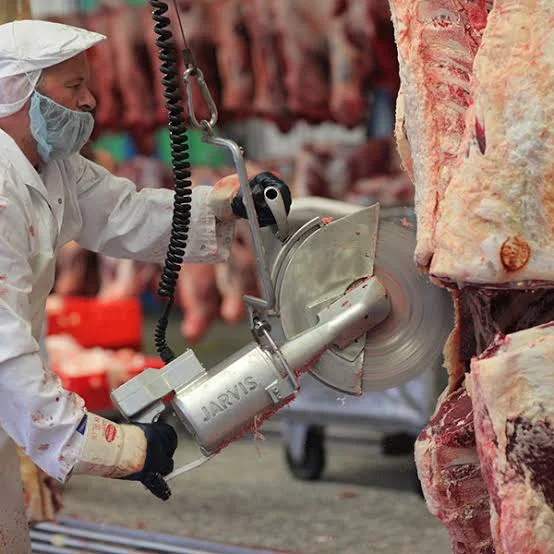
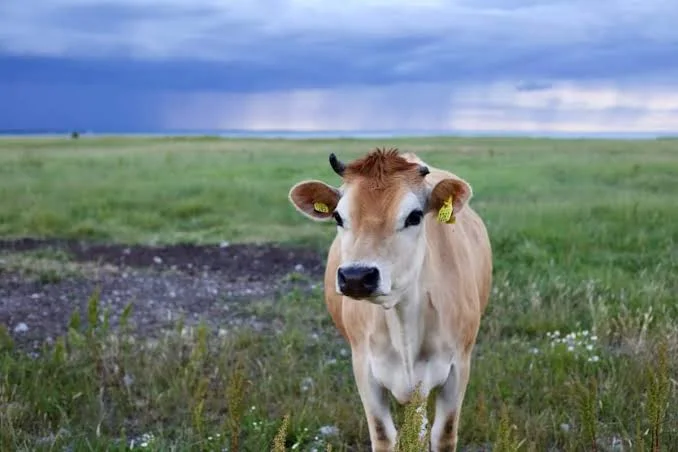
Beef is the flesh of an adult female or male cow, ox or bull that is brutally used for food. Beef (or meat from cattle) is categorised as red meat which means it comes from mammals with higher amounts of iron. Calves are born and raised with the other calves and their mothers for the first several months, after being moved to the feedlots the innocent cows are fed grass and grain to reach market weight before they are slaughtered, packaged and sent to local communities and around the world for human consumption.
How Much Beef Is Being Produced?
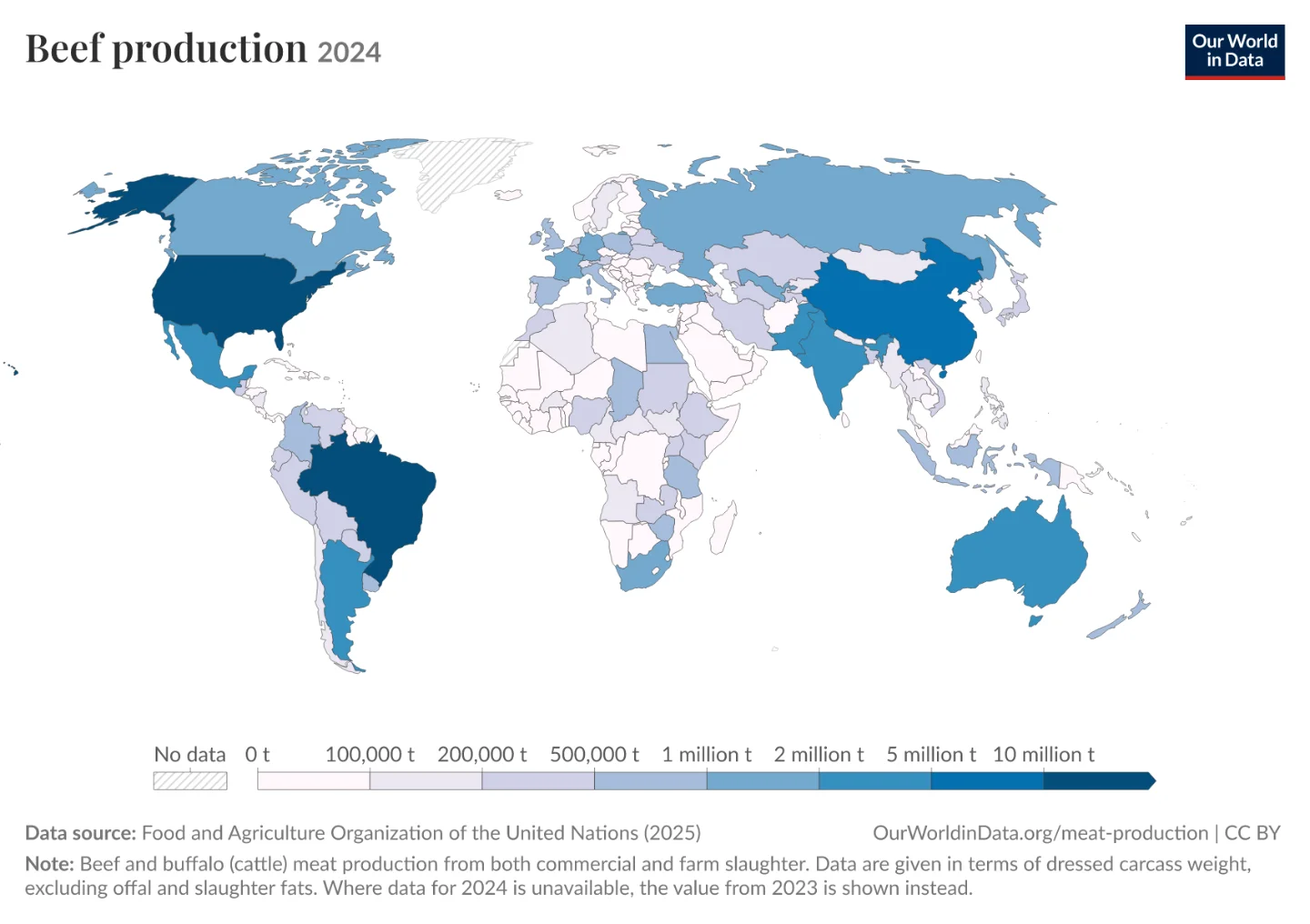
There are many countries around the world that have gotten on the beef bandwagon but the leading producers of Brazil and the United States generate more than 10 million tonnes of beef annually. While Brazil produces 12.61 million tonnes of beef annually that is only 20% of global sources which is a lot of cattle being massacred for the pleasure and consumption of humankind.
The Problem With Beef Production
Due to the specific grassland biome that is ideal for beef production there is minimal places for cattle to be bred correctly in a safe environment which is why places like Brazil, the United States of America, Australia and Argentina are the optimal weather conditions for farms because they get the correct amount of rain, hot summers, cold winters and buffalo grass which cattle spend most of their short, sad lives eating for going to market.
Challenges of Beef Production
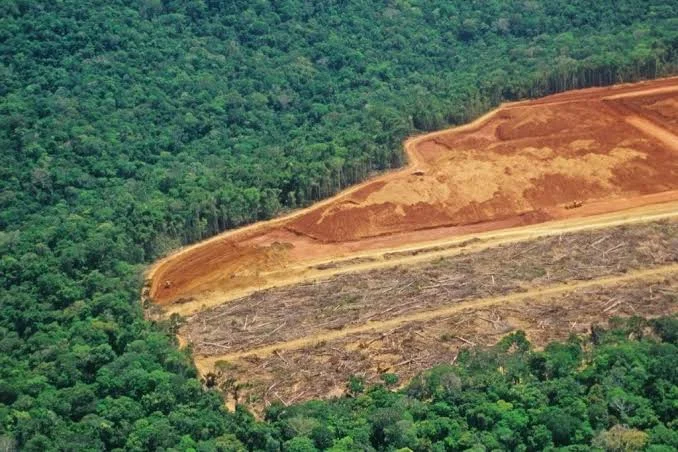
While many are for the production of beef because of the economic environment there are many that are quick to point out the environmental impacts that beef causes on our already declining planet. The biggest environmental impact that not only beef farming but all kinds of farming produces is deforestation because farms need immense space for the product to be.
Scary Statistics
In the world of farming, global warming and environmental health there are a lot of statistics that make people a little anxious, and rightly so.
-Livestock production creates about 14% to 18% of all global greenhouse gas emissions.
-Cattle produce about 32% of human-caused global methane emissions through digestion and methane traps heat much faster than carbon dioxide.
-Grazing and growing feed crops use nearly one-third of the planet's usable land.
-Manure and urine release nitrous oxide, which is another powerful greenhouse gas.
- A single kilo of beef creates about 70kg of greenhouse gas emissions.
Expert/Consumer Perspectives
There have been many articles about the changing farming methods.
"Colonists arriving in Australia in the 1800s traditionally set out to ‘conquer’ or ‘tame’ the land, and applied European methods of farming in doing so. We now realise that this path is not sustainable. Producers must work with the land and its climate, within its limitations."- New South Wales Government
"Cattle in pasture-based systems are subject to high levels of environmental variation to which specific genotypes are better suited."- Science Direct.com
A New Hope
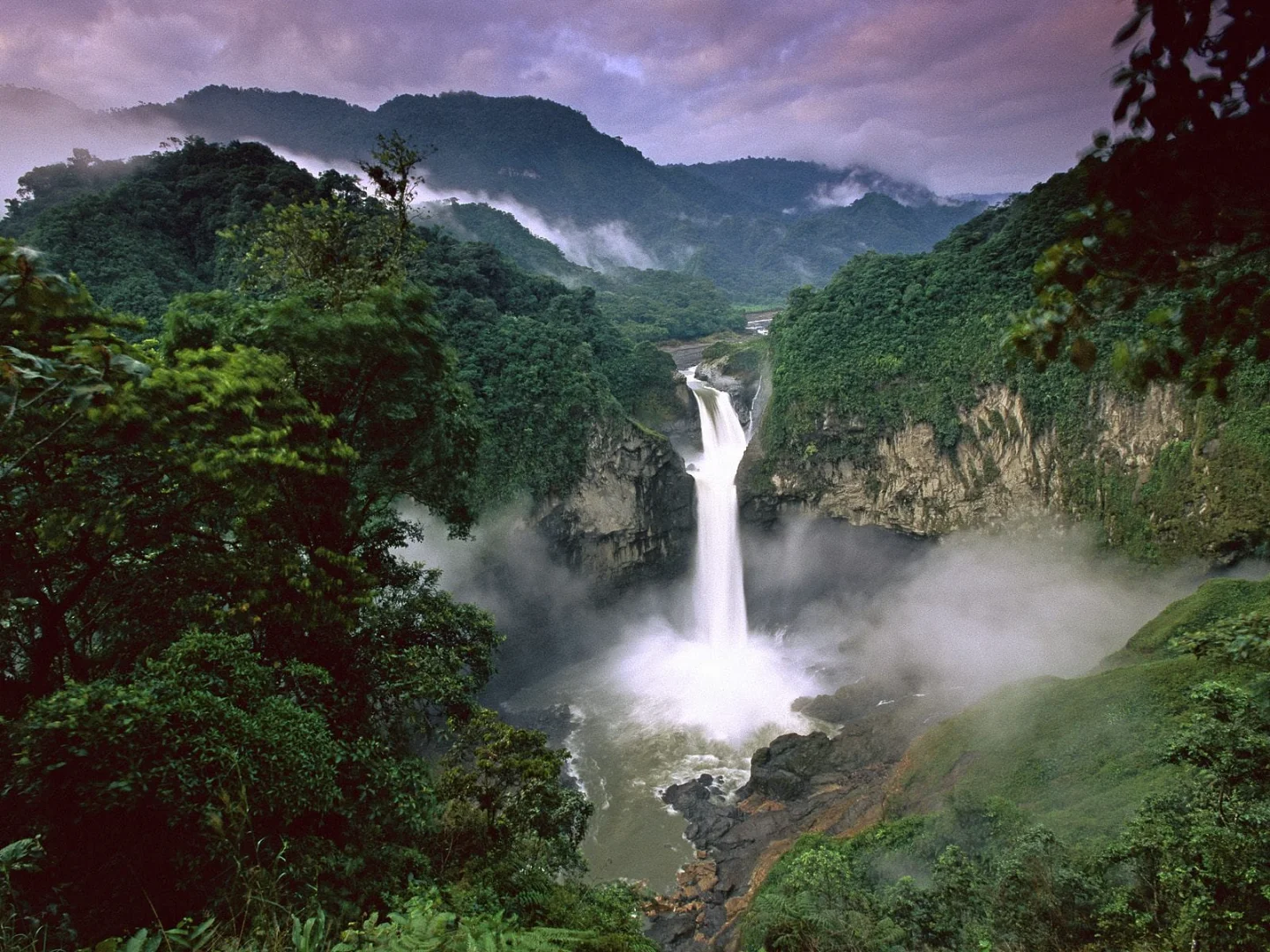
There are many advances in the technological age that we are living in and the world of farming as not been missed, with inventions of plant based 'meats', cultured meats, manure management and regenerative farming there is hope that the Amazon Rainforest with one day be left alone in all it's South American Glory.
There are many views on sustainable farming with some people heavily for it due to the water irrigation and conservation, the support of local communities so farmers can reinvest their money and for the stability of the food supply. However, as always, money is the biggest reason that people are against sustainable farming because all the equipment and the training will be very expensive and the money will likely come from taxes, the training of people will be very hard in remote areas which farms are generally in.
Conclusion
Farming has been around for thousands of years as the main source of food for humans and today in the technological age we have been able to take it to a whole new level. While opinions are and will always be mixed there has been significant improvement with the inventions of plant based 'meats', cultured meats, manure management and regenerative farming we can begin to relax as beautiful biomes such as the Amazon Rainforest which has lost between 17% and 20% of its beautiful scenery to farming.
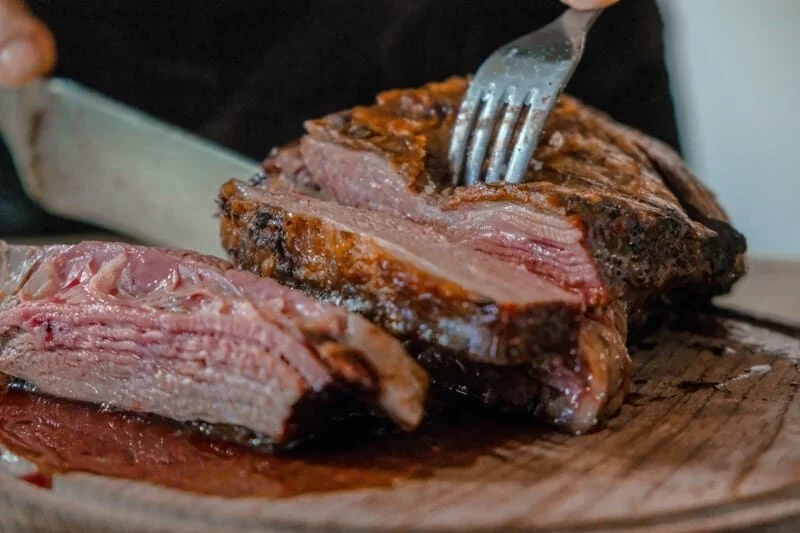
Public consumption of beef has gotten completely out of control with the average Argentinian eating roughly 45kg of the meat a year and many other countries not far behind that statistic.
The question is: Will sustainable farming arrive before the Amazon is gone?
Bibliography
- dhudspit (2026). What is sustainable agriculture? [online] Insight – Charles Sturt University. Available at: https://insight.study.csu.edu.au/what-is-sustainable-agriculture/ [Accessed 24 Aug. 2026].
- Atli Arnarson BSc, PhD (2019). Beef 101: Nutrition facts and health effects. [online] Healthline. Healthline Media. Available at: https://www.healthline.com/nutrition/beef [Accessed 17 Aug. 2026].
- Alberta Cattle Feeders’ Association (2017). The 7 stages of beef cattle production. [online] Alberta Cattle Feeders’ Association. Available at: https://cattlefeeders.ca/the-7-stages-of-beef-cattle-production/ [Accessed 17 Aug. 2026].
- Australian Governement (2026). Beef cattle farmers. [online] Jobs and Skills Australia. Available at: https://www.jobsandskills.gov.au/data/occupation-and-industry-profiles/occupations-anzsco/121312-beef-cattle-farmers [Accessed 17 Aug. 2026].
- Beef | USDA foreign agricultural service. (2025). [online] Usda.gov. Available at: https://www.fas.usda.gov/data/production/0111000 [Accessed 17 Aug. 2026].
- de la Maza, A. (2023). Sustainable agriculture: Definition, advantages and policies. [online] Aninver.com. Available at: https://aninver.com/blog/sustainable-agriculture-definition-advantages-and-policies [Accessed 20 Aug. 2026].
- Definition of BEEF. (2019). [online] Merriam-webster.com. Available at: https://www.merriam-webster.com/dictionary/beef [Accessed 17 Aug. 2026].
- Entine, J. (2019). Viewpoint: Lab-grown meat should replace farm animals as food. [online] Genetic Literacy Project. Available at: https://geneticliteracyproject.org/2019/05/16/viewpoint-lab-grown-meat-should-replace-farm-animals-as-food/ [Accessed 20 Aug. 2026].
- Government, N.S.W. (2007). Responsible, sustainable beef production. [online] Nsw.gov.au. Available at: https://www.dpird.nsw.gov.au/animals-and-livestock/beef-cattle/husbandry/general-management/production [Accessed 27 Aug. 2026].
- Greenwood, P. (2021). Review: An overview of beef production from pasture and feedlot globally, as demand for beef and the need for sustainable practices increase. Animal, [online] 15(1), p.100295. doi:10.1016/j.animal.2021.100295.
- Hurt, A. (2016). Grassland habitat. [online] Nature. Available at: https://kids.nationalgeographic.com/nature/habitats/article/grassland [Accessed 17 Aug. 2026].
- Ledbetter, K. (2026). Drought slows herd expansion, beef prices remain high. [online] Farm Progress. Available at: https://www.farmprogress.com/cattle-news/drought-slows-herd-expansion-beef-prices-remain-high [Accessed 17 Aug. 2026].
- OECD. (2026). Meat: OECD-FAO agricultural outlook 2026-2035. [online] Available at: https://www.oecd.org/en/publications/oecd-fao-agricultural-outlook-2026-2035_47874669-en/full-report/meat_149b4ca3.html [Accessed 17 Aug. 2026].
- radimin (2024). How to reduce methane emissions from cattle: All you need to know - the anaerobic digestion & biogas blog. [online] The Anaerobic Digestion & Biogas Blog. Available at: https://blog.anaerobic-digestion.com/how-to-reduce-methane-emissions-from-cattle/ [Accessed 20 Aug. 2026].
- Ritchie, H., Roser, M. and Rosado, P. (2023). Meat and dairy production. [online] Our World in Data. Available at: https://ourworldindata.org/meat-production [Accessed 17 Aug. 2026].
- Rutherford, B. (2013). 5 Experts predict cattle industry’s future. [online] Beef Magazine. Available at: https://www.beefmagazine.com/farm-business-management/5-experts-predict-cattle-industry-s-future [Accessed 17 Aug. 2026].
- Shields, R. (2025). 8 Reasons why sustainable agriculture is important. [online] Agrirs.co.uk. Available at: https://www.agrirs.co.uk/blog/2019/07/8-reasons-why-sustainable-agriculture-is-important?source=google.com [Accessed 20 Aug. 2026].
- Spindler, H. (2025). Why beef is bad for the environment, explained. [online] Thehumaneleague.org. Available at: https://thehumaneleague.org/article/is-beef-production-bad-for-the-environment [Accessed 17 Aug. 2026].
- theWORLDMAPS (2023). Mapped: Meat Consumption By Country and Type. [online] Visual Capitalist. Available at: https://www.visualcapitalist.com/cp/mapped-meat-consumption-by-country-and-type/ [Accessed 17 Aug. 2026].